Tahajjud is the voluntary prayer of the night, prayed after Isha and before Fajr. The later part of the night is the best time for it, and the last third is a time of particular blessing: the Prophet ﷺ said that Allah descends to the nearest heaven then and answers those who call on Him.
The last third of the night is not a fixed clock time. It is calculated from the night between Maghrib and Fajr, so it moves with your city and the season.
What time is the last third of the night tonight?
Pick a city, or use your location, to see tonight's times where you are:
London · 21 December 2026
London Unified Prayer Timetable
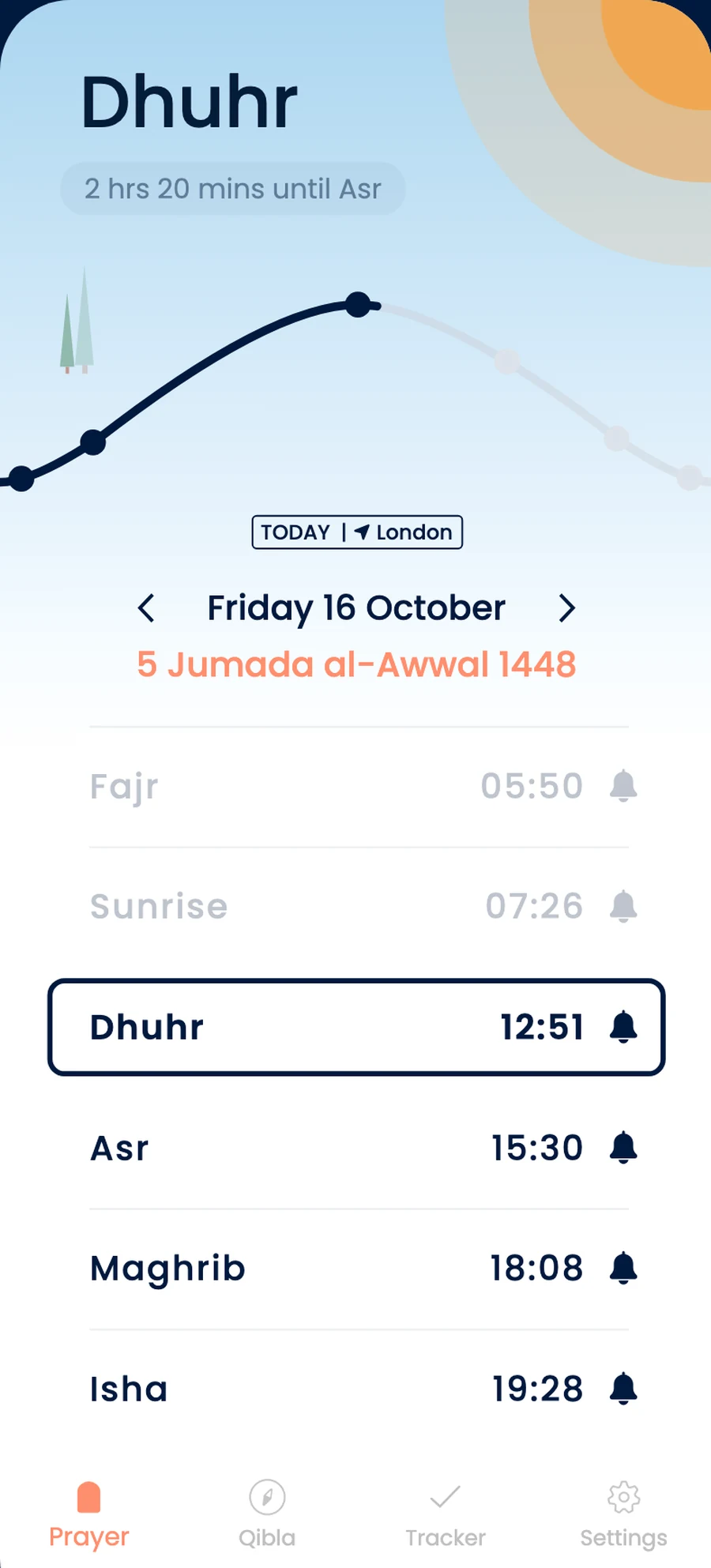
See prayer times today for the other prayers and a full month. For accurate prayer times wherever you are, Pillars chooses the right calculation method for your location and updates it as you travel.
How is the last third of the night calculated?
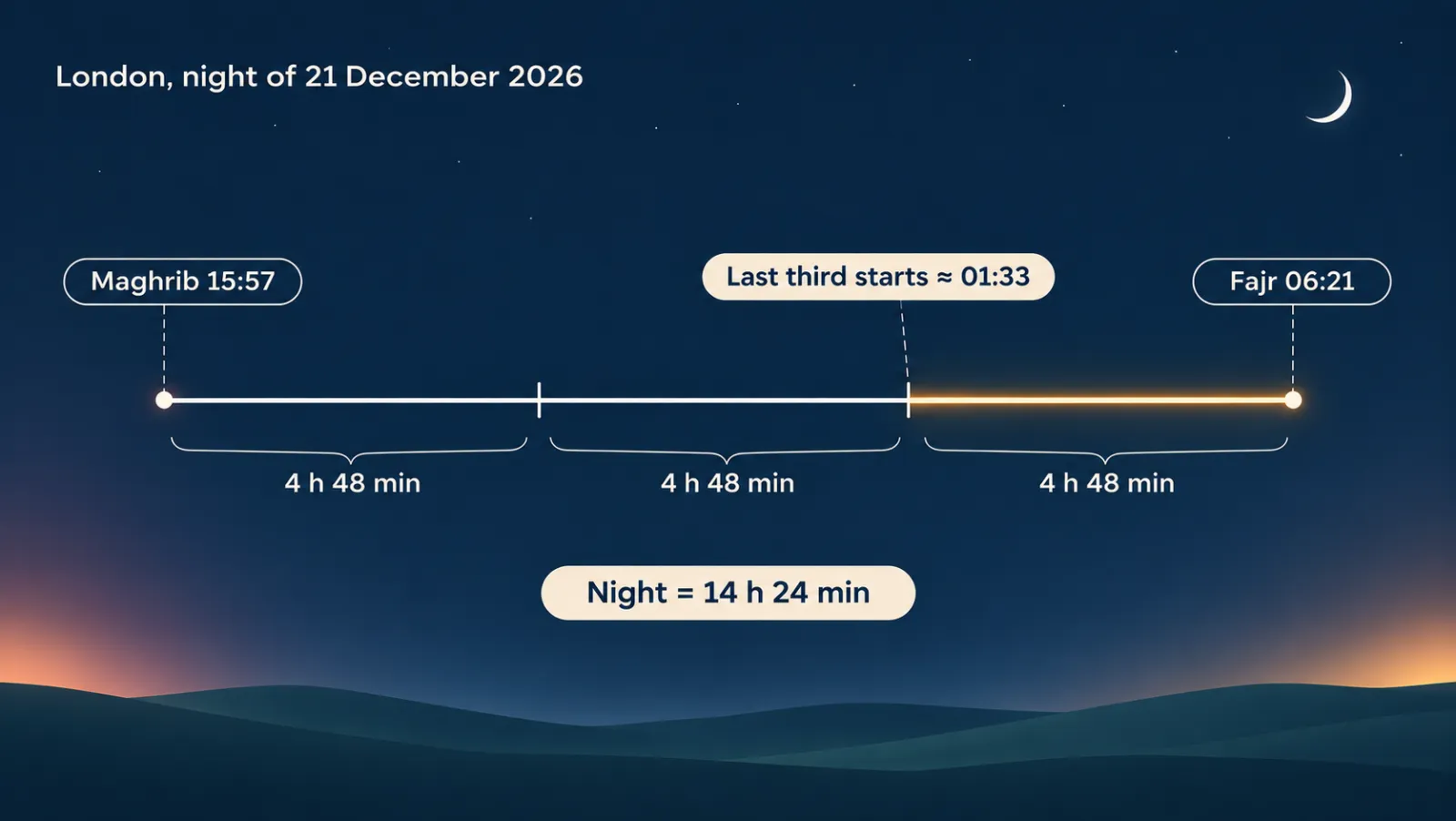
Take the length of the night from Maghrib to Fajr, divide it by three, and count one third back from Fajr. For example, in London on the night of 21 December 2026:
- Maghrib: 15:57
- Fajr the next morning: 06:21
- Length of the night: 14 hours 24 minutes
- One third of the night: 4 hours 48 minutes
- Last third of the night starts: 06:21 − 4 hours 48 minutes, about 01:33
Your calculation method decides when Fajr is, so it moves the last third too. Far from the equator in summer, Fajr also depends on a high-latitude rule, which can move the last third by an hour or more. Here is tonight's start of the last third under each method:
| Timetable or method | Last third starts |
|---|---|
| London Unified Prayer Timetable | 01:34 |
| Muslim World League | 01:18 |
| ISNA (North America) | 01:32 |
| Egyptian General Authority of Survey | 01:12 |
| Umm al-Qura (Makkah) | 01:16 |
| Moonsighting Committee | 01:34 |
| Gap between methods | 22 min |
What is Tahajjud?
Tahajjud is a voluntary prayer at night, and a confirmed sunnah (sunnah mu'akkadah). The Prophet ﷺ prayed it regularly, and Allah says:
وَمِنَ ٱلَّيْلِ فَتَهَجَّدْ بِهِۦ نَافِلَةً لَّكَ عَسَىٰٓ أَن يَبْعَثَكَ رَبُّكَ مَقَامًا مَّحْمُودًا ﴿٧٩﴾
“And from [part of] the night, pray with it [i.e., recitation of the Qur’ān] as additional [worship] for you; it is expected that your Lord will resurrect you to a praised station.”
The word tahajjud comes from hujud, sleep: to pray Tahajjud is to give up sleep for prayer. Many scholars use the name for any voluntary prayer at night after Isha. Others keep it for prayer after waking from sleep, which is how the Prophet ﷺ usually prayed: he "used to sleep early at night, and get up in its last part to pray" (Sahih al-Bukhari 1146). Either way, it is prayed between Isha and Fajr.
When is the best time to pray Tahajjud?
You can pray Tahajjud at any time after Isha until Fajr begins, and the later part of the night is better than the earlier part. The last third is a time of particular blessing: the Prophet ﷺ said that every night, "when the last third of the night remains", Allah descends to the nearest heaven and says, "Is there anyone to invoke Me, so that I may respond to invocation?" (Sahih al-Bukhari 1145). Allah describes the righteous:
كَانُوا۟ قَلِيلًا مِّنَ ٱلَّيْلِ مَا يَهْجَعُونَ ﴿١٧﴾ وَبِٱلْأَسْحَارِ هُمْ يَسْتَغْفِرُونَ ﴿١٨﴾
“They used to sleep but little of the night, and in the hours before dawn they would ask forgiveness.”
The Prophet ﷺ also said that the night prayer most beloved to Allah was that of the Prophet Dawud (peace be upon him), who "used to sleep for half of the night and then pray for one third of the night and again sleep for its sixth part" (Sahih al-Bukhari 1131). Praying this way means praying from the middle of the night until the last sixth, which includes the first half of the last third.
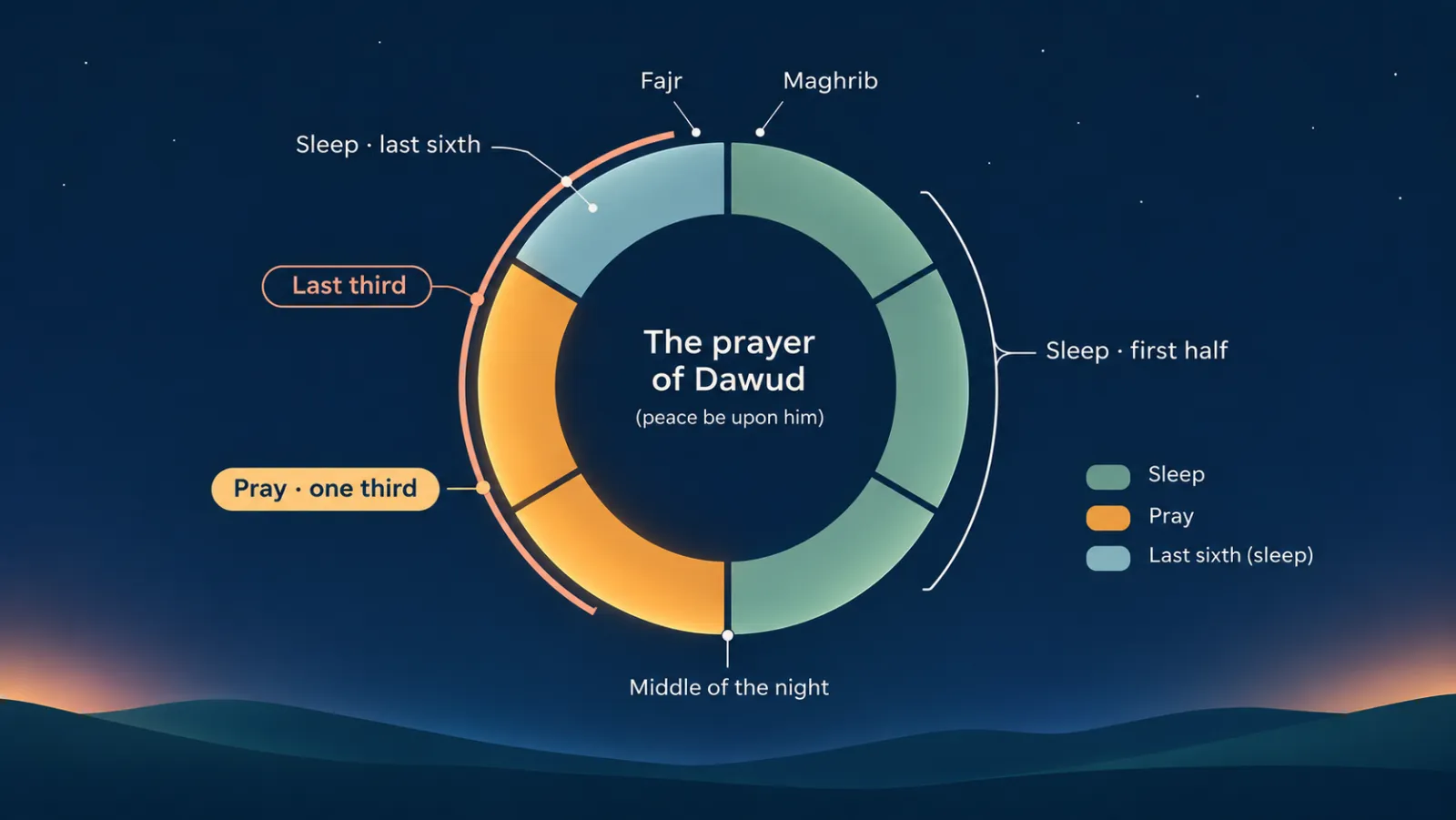
The four schools agree that the later part of the night is best. They differ slightly on which part is best of all:
- Hanafi, Shafi'i and Hanbali
The last half of the night is better than the first, and the best of all is the third after the middle of the night, as in the prayer of Dawud. - Maliki
The very end of the night. It is better to delay Tahajjud and Witr until then, for someone who expects to wake.
The Prophet ﷺ said to make Witr the last prayer of the night (Sahih al-Bukhari 998). If you expect to wake, pray it after Tahajjud; if you fear you will not, pray it before you sleep.
How do I find the last third of the night where I am?
The card above does this for your city. To work it out yourself:
- Check your local mosque's timetable
Note tonight's Maghrib and tomorrow's Fajr. - Apply the calculation above
Fajr minus one third of the Maghrib-to-Fajr night is when the last third begins.
In Pillars, all of this is in Settings, under Prayer Times:
- Autopilot
On by default. It picks a valid calculation method for the country you are in, and changes it as you travel (in supported countries). - Calculation method
Turn Auto-Detect off to choose your own from 23 methods, each listed with its Fajr and Isha angles. - High-latitude rule
Twilight angle, middle of the night or one-seventh of the night. - Custom adjustments
Move Fajr or Maghrib a few minutes earlier or later to match your mosque.
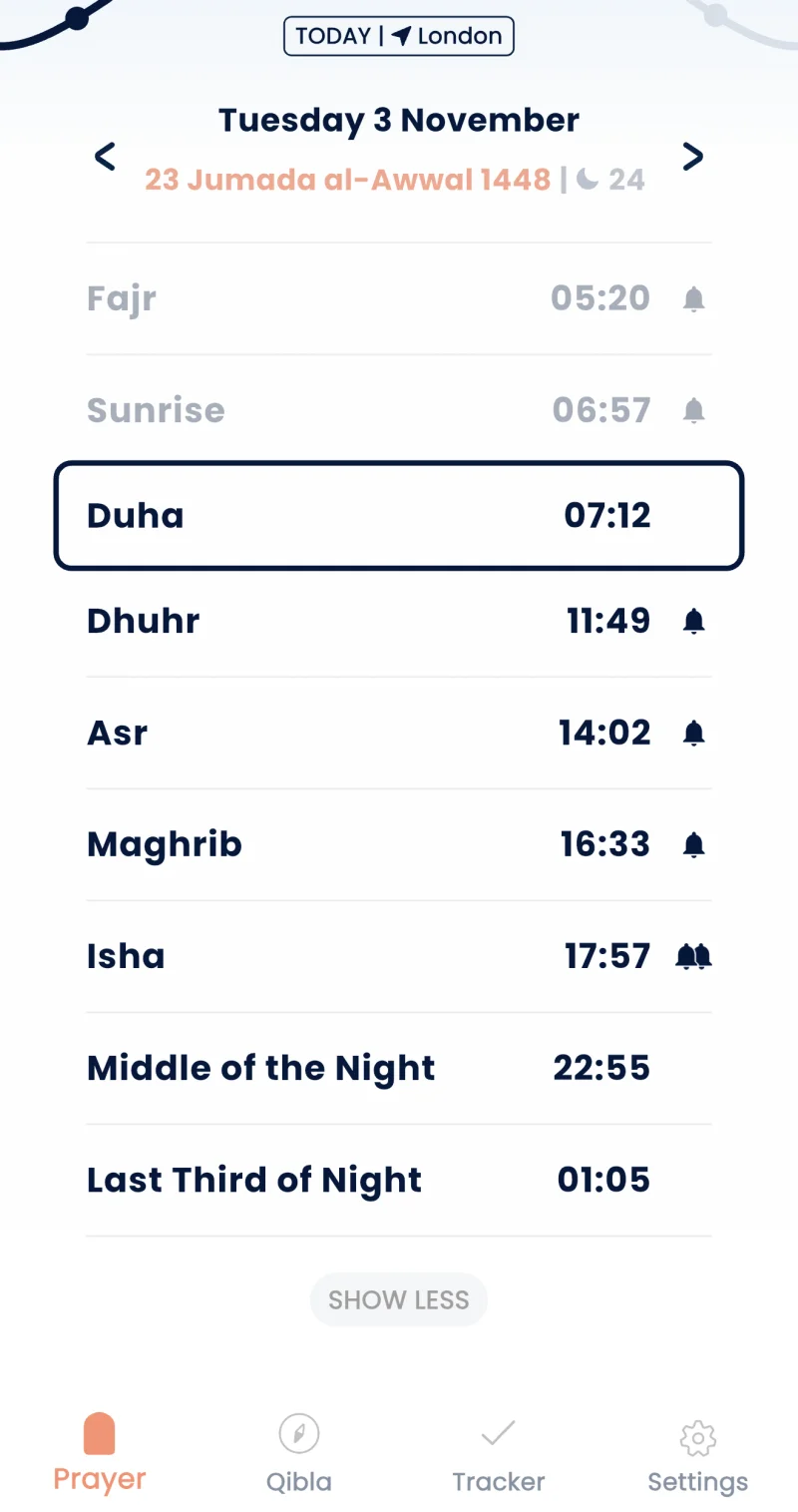
Pillars also shows the middle of the night and the start of the last third of the night on the prayer times screen, both measured from Maghrib to Fajr.
Keep reading